Soundproofing an Apartment in Dubai: What Works
Yes, you can soundproof an apartment, but only to a degree, and only if you treat the right path for the noise. Sound travels through walls, ceilings, floors, doors, windows and gaps around pipes. Foam panels and egg boxes do almost nothing against it. What works is mass, a break in the structure (decoupling), damping and sealed gaps, usually in combination.
In Dubai the main complaints are a neighbour's footsteps from above, voices and TV through party walls, corridor noise at the entrance door, traffic and construction on the façade side, and AC and plumbing noise. Each has a different fix, so we start by finding out which one you have.
Airborne noise versus impact noise: diagnose before you spend
Airborne noise is voices, music and TV. It passes through anything that is light or leaky. Impact noise is footsteps, dragged chairs and dropped objects. It travels through the slab itself and re-radiates from your ceiling and walls.
The distinction decides the work. Airborne noise responds well to heavier, sealed constructions. Impact noise from the apartment above is much harder to fix from below, because the source is in the neighbour's floor. The best cure is a soft or floating floor on their side, which you cannot order. From your side you can improve the ceiling, but expect a reduction, not silence.
- Voices through a shared wall: very treatable.
- Traffic and exterior noise: mostly a window and seal problem.
- Footsteps from above: partly treatable, with an honest limit.
- Noise from your own apartment to the neighbours: treatable on the floor, and often required by the building.
What works, surface by surface
Walls
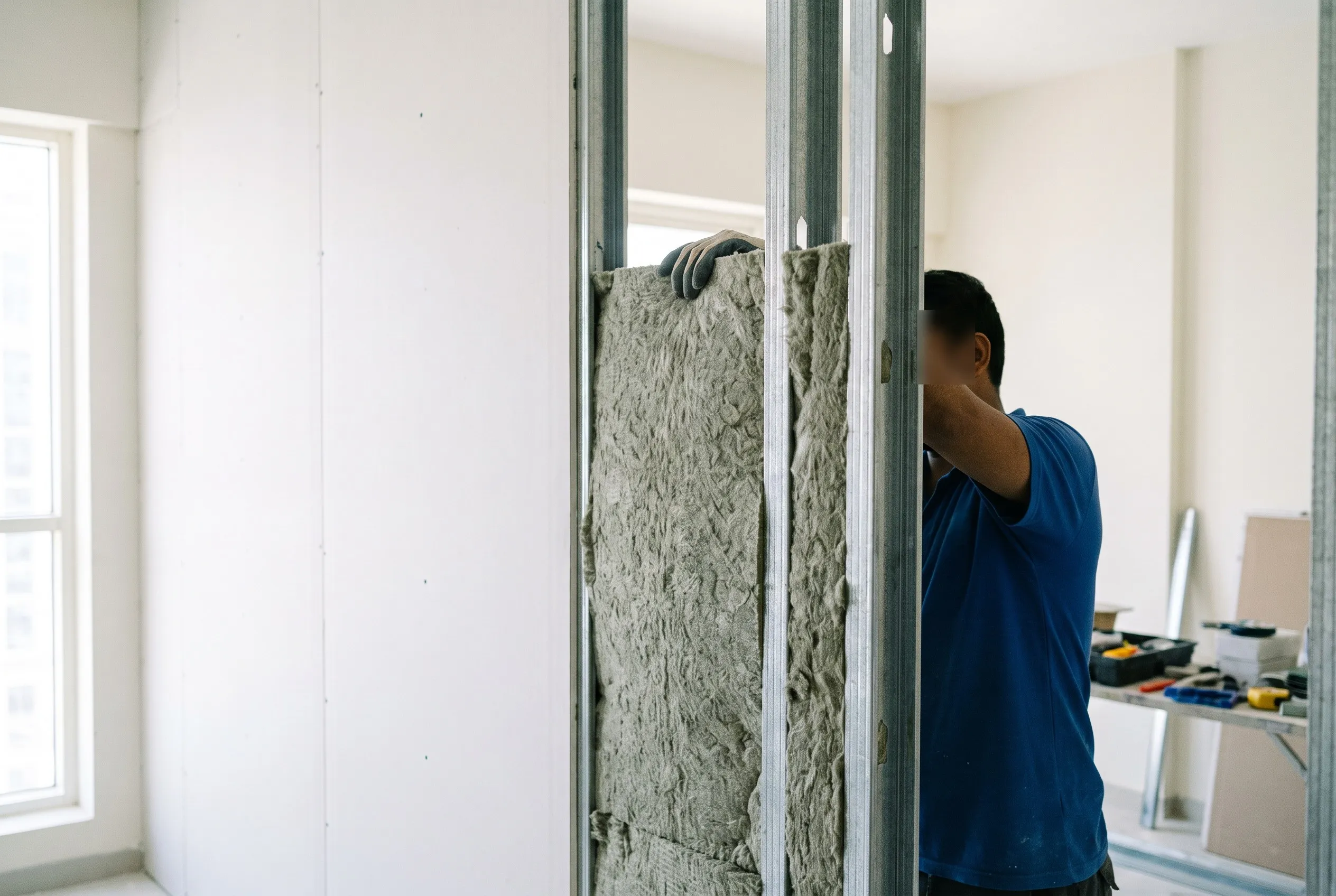
A second skin on the party wall: a separate light frame, mineral wool in the cavity, and two layers of dense plasterboard with the joints offset and sealed. The frame should not be rigidly tied to the old wall. The room loses some floor area, so we plan it on the drawings first.
Ceilings
A suspended ceiling hung on resilient hangers, mineral wool above and dense boards below. A standard gypsum ceiling only hides the slab and does little for sound. See our guide to gypsum ceilings in Dubai for how the layers go together. Recessed spotlights must be sound-rated or boxed, otherwise they leave holes in the layer.
Floors
A floating build-up: a resilient underlay or mat, then the screed or board and the finish, separated from the walls by an edge strip. This reduces the impact noise you send down. Heavier finishes also affect how loud a floor sounds, which we cover in the comparison of real wood and wood-look porcelain.
Doors and windows
A solid-core entrance door with perimeter seals and a drop seal at the threshold. For windows, the usual gain comes from better seals and, where the building allows it, laminated or double glazing. Façades and glazing are often controlled by the owners' association, so ask first.
What does not work
Acoustic foam, carpet on one wall, curtains and egg boxes absorb echo inside the room. They improve how the room sounds but barely stop sound crossing a wall. A single extra sheet of board screwed straight to the old wall also gives a small gain, because it is rigidly coupled and the cavity resonates.
The weakest point controls the result. A good wall with an unsealed socket box, a gap under the door or an open ceiling void will leak. Back-to-back sockets on a party wall are a classic example, so we offset them and seal around every box.
Sealing matters as much as material. Air gaps around pipes, cable penetrations, door frames and ceiling lights can undo a heavy wall. Treat the whole room as a sealed box, and do not expect a thin layer on one surface to change the noise you hear.
Approaches compared
| Approach | Best against | What you give up | Typical limit |
|---|---|---|---|
| Decoupled wall lining with mineral wool | Voices, TV, music through party walls | Some floor area, usually a few centimetres per side | Flanking through floor and ceiling |
| Resilient suspended ceiling | Voices and some impact noise from above | Ceiling height | Footsteps stay audible at low frequencies |
| Floating floor with underlay | Footsteps you send down | Floor height, door clearances | Needs building approval |
| Solid door with seals | Corridor and lift-lobby noise | Door weight, new frame work | Gaps at the threshold |
| Window seals or upgraded glazing | Traffic, construction, outdoor noise | Façade rules in many towers | Open windows and vents |
| Absorbers (panels, rugs, curtains) | Echo inside the room | Very little | Does not block transmission |
Approvals and building rules in Dubai
Soundproofing is construction. Linings, new ceilings and floor build-ups are the kind of work the building must know about. The owners' association or developer typically needs to approve the scope before noisy or intrusive works start, and the submission often includes drawings, a method statement, insurance and a refundable deposit. We prepare and submit those documents for the building NOC. Our article on the Dubai apartment renovation NOC explains the process.
Floor changes deserve a specific check. A floating floor raises the level and changes how the slab behaves, and some buildings set their own requirements for flooring and underlay. We do not assume a rule here; confirm with your building management before ordering materials. If you rent, you also need the landlord's written approval (see tenant renovation and landlord approval).
The works themselves are loud, so working hours matter, and each tower sets its own in the NOC. More in renovation working hours and building rules in Dubai.
How we run a soundproofing job
- Survey and listening We visit, measure, photograph and identify the noise path: which wall, which ceiling, which gaps. We agree the target and the budget with you.
- Build-up design We draw the layers, the height and area you lose and the position of lights, sockets and AC. You see the result on drawings and visualisation before work starts.
- Approval We prepare the building NOC documents and any authority approvals the scope needs.
- Preparation and sealing Penetrations are sealed, cavities filled with mineral wool, and hangers and edge strips fitted. Hidden work is photographed before it is covered.
- Boards, finishes and details Layers are fixed with offset joints, sockets and lights are boxed and sealed, and doors are fitted with seals.
- Handover We check the result against a checklist, clean up and give you a written warranty.
Plan it with the renovation, not after
The cheapest moment to soundproof is when walls and ceilings are already open: a new ceiling, rewiring or a bathroom rebuild. Adding mineral wool and a second board layer then costs little extra. Retrofitting a finished room means demolishing finishes you just paid for. If you are planning a larger job, look at our apartment renovation service and fold the acoustics into the same scope. We give an itemised quote after the survey, and the price and timeline are fixed in the contract.
Soundproofing works when you match the fix to the noise path: decoupled linings for voices, a resilient ceiling and floating floor for impact noise, seals and a solid door for the corridor. It will not make an apartment silent, and footsteps from above are the hardest case. Decide the target first, get building approval, and do it during a renovation if you can.
Not sure where the noise comes from?
We visit, measure, identify the noise path and tell you what is realistic. You get an itemised quote with a fixed price and timeline.
Book a site surveyFAQ
Can you soundproof an apartment completely?
No. You can reduce noise noticeably, especially voices and airborne sound through party walls, but total silence is not realistic. Impact noise such as footsteps from the apartment above is the hardest to cut from your side.
Do I need building approval to soundproof my apartment in Dubai?
Usually yes for anything built: wall linings, new ceilings and floor build-ups. The owners' association or developer typically approves the scope first, and tenants also need written landlord approval. Check the building's own rules, as they differ.
Will soundproofing reduce my ceiling height or room size?
Yes. A decoupled wall lining takes a few centimetres per side, a resilient ceiling takes height, and a floating floor raises the level. We plan these on drawings before work so doors, lights and AC still fit.
Do acoustic panels or foam stop noise from neighbours?
Not really. Panels and foam absorb echo inside your room but do not stop sound crossing a wall or ceiling. To block transmission you need mass, a break in the structure, damping and sealed gaps.