Villa Roof Waterproofing in Dubai: Methods, Warranty
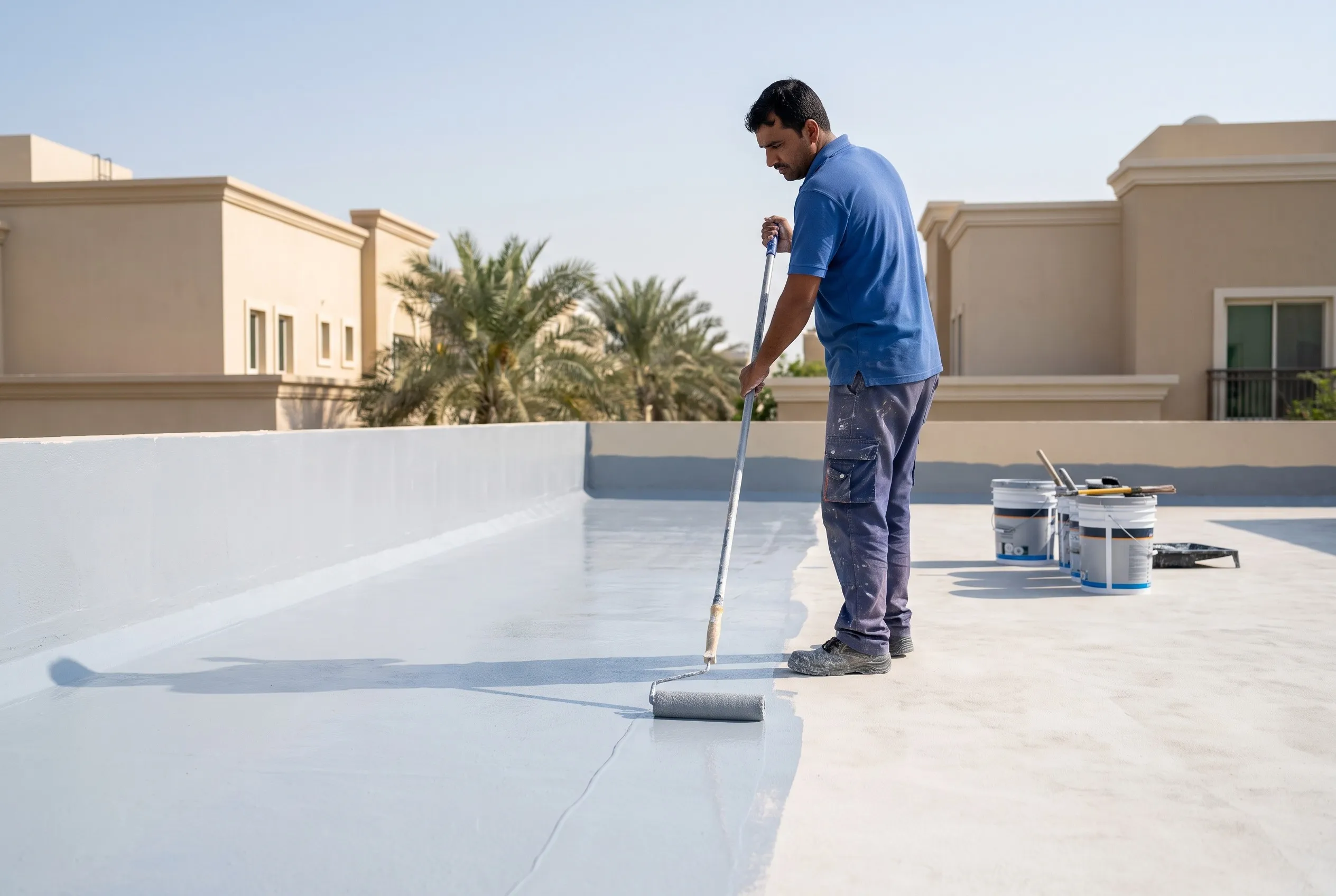
A villa roof in Dubai is waterproofed with one of three system types: a sheet membrane, a liquid-applied coating, or a cementitious layer. Which one is right depends on the roof's shape, its use and what sits on top of it. The system matters less than the detailing around it: upturns, drains, joints and penetrations. This is where most roof leaks start. A leak-free result also needs a flood test and a written warranty that names what is covered.
Below we explain how each system behaves in Dubai heat, how the work is done, what to ask about the warranty, and how to compare quotes.
What a Dubai villa roof has to survive
The roof is hit by heat rather than frost. In summer a flat roof surface gets very hot and cools sharply at night. This expands and contracts the layers every day, so the waterproofing has to stay flexible and keep bonding to the substrate. Rain is rare but heavy when it comes, and a roof with poor falls or blocked drains holds water for days. Near the coast, salt and humidity also attack metal fixings and weak joints.
Most villa roof problems come from the same few places:
- the junction between the roof slab and the parapet wall;
- drain outlets and overflow pipes;
- pipes, AC refrigerant lines and cable penetrations through the slab;
- cracks and expansion joints in the screed;
- water tanks, solar heater bases and pergola posts fixed through the membrane.
A leak that shows as a stain on a bedroom ceiling often enters metres away from where it appears. This is why we survey the whole roof before recommending a system.
The main waterproofing systems compared
Sheet membrane
Prefabricated sheets (EPDM, PVC or bitumen-based) are laid over a prepared substrate and joined at the seams. Quality is consistent because the thickness is made in a factory. The weak points are the seams and the corners, which need careful detailing. It suits large, simple roofs.
Liquid-applied coating
A polyurethane, polyurea or acrylic coating is rolled or sprayed on and cures into a seamless layer. It follows awkward shapes, curves and many penetrations without joins. The result depends on applying the right thickness and on the weather during curing.
Cementitious layer
A cement-based slurry applied in coats. It is rigid, bonds well to concrete and suits wet areas and tanks. On an exposed roof it can crack when the slab moves, so we use it only where movement is limited, or as a base under another system.
For a fuller comparison of these three types, see our article on membrane, polyurea and cementitious waterproofing in Dubai.
| System | Best suited to | Weak point | Check before you sign |
|---|---|---|---|
| EPDM sheet | Large flat roofs with few penetrations | Seams and corners | How seams are bonded and tested |
| PVC sheet | Roofs needing welded seams | Fixing details at edges | Whether seams are heat-welded |
| Bitumen sheet | Roofs that will be tiled or covered | Needs protection from direct sun | What goes on top of it |
| Polyurethane / polyurea liquid | Complex roofs, many pipes and upturns | Thickness varies with the applicator | Product datasheet and coats applied |
| Silicone liquid | Exposed roofs, over existing sound coating | Hard to repair or recoat later | Compatibility with the old surface |
| Cementitious | Tanks, planters, small stable areas | Cracking if the slab moves | Whether a flexible grade is used |
As a rough guide, material-only prices quoted online for roof membranes are about AED 50–100 per sq m for EPDM, AED 80–150 for PVC and AED 100–200 for silicone. These figures exclude labour, surface preparation, falls, drains and detailing, so they say little about a finished roof. Treat them as an indication of the material only, and ask for an itemised quote for your own roof.
How the work goes on a villa roof
Whatever the system, the sequence is the same. Skipping the early steps is the usual reason a new layer fails within a few seasons.
- Survey and moisture check We inspect the roof, drains, parapets and penetrations, photograph the defects and look inside for stains that show where water travels.
- Strip and prepare Failed coatings, loose screed and old tiles are removed where needed. The surface is cleaned, cracks are repaired and falls are corrected so water runs to the drains.
- Detail the edges Upturns are formed at the parapets, drain outlets are fitted properly, and every pipe is sealed with a purpose-made detail, not just a bead of sealant.
- Apply the system The membrane or coating goes on in the stages the manufacturer specifies, with curing times respected. Hidden layers are photographed before they are covered.
- Flood test The roof is flooded and left for 24 hours, with the underside checked for dampness. Nothing is laid on top until it passes.
- Protect and finish Screed, tiles or a reflective finish go on only after the test. We send daily photos so you can follow progress even from abroad.
Do not accept a roof coating applied over a wet, dusty or cracked surface, and never cover the waterproofing before it has been flood tested. Most roof failures are visible in the preparation, which is exactly the part that is hidden once the final layer goes on. Ask to see photos of each stage.
Timing, heat and the midday break
Roof work is outdoor work. From 15 June to 15 September the UAE midday break bans work in direct sunlight between 12:30 and 15:00, and reports for 2026 confirm the same dates. In practice this means roof crews start early in summer. It also affects waterproofing directly: liquid coatings and adhesives should not be applied to a surface that is too hot, because they can skin over or bubble. A good contractor plans application for cooler hours, and some roofs are better scheduled for the cooler months.
Flood testing also depends on the product. Standard guidance for horizontal waterproofing is a test of about 24 to 72 hours, but only after the membrane has cured, and cure times differ widely between manufacturers, from a couple of hours to several days. We follow the datasheet for the product used. There is no Dubai-specific rule we can quote for the test duration, so the datasheet and the contract are what count.
Warranty: what to ask for in writing
We give a written warranty at handover, and you should ask any contractor for the same. The length of a warranty means little unless it states what is covered. Ask these questions before signing:
- Does it cover the whole system (workmanship and materials) or only the product?
- Does it include the details, such as upturns, drains and penetrations, where leaks actually occur?
- Who comes to inspect a leak, how quickly, and who pays for removing finishes to reach it?
- Which actions void it? For example, fixing a pergola or solar panel through the layer without informing the contractor.
- Is the flood-test result and the photo record of hidden layers part of the handover pack?
Keep the contract, datasheets and photos together. Our article on renovation contract clauses shows how to word the scope and the warranty so there is no argument later.
Permits, communities and combining with other works
Repairing and re-waterproofing an existing roof is usually treated differently from changing it. Raising the roof, adding a terrace structure or altering the slab is a modification that needs developer approval, and in many villa communities in Dubai the master developer, such as Emaar or Nakheel, has its own process. Check with your community management first. Our guide to the villa permit steps with Dubai Municipality explains when a permit applies, and we prepare the NOC documents for you where they are needed.
It is cheaper to waterproof the roof during a larger project than on its own, because scaffolding, access, debris removal and the tiling that follows are shared. If you are planning a wider refresh, see the stages of a full villa renovation and the villa renovation cost guide. Wet rooms inside the villa follow the same logic, covered in bathroom waterproofing cost.
Choose the system by the roof, not by the price of the material: sheets for large simple roofs, liquid coatings for complex ones, cementitious layers only where the slab is stable. Insist on proper detailing, a 24-hour flood test and a written warranty that covers workmanship. If your roof leaks, start with a survey, since the point where water enters is often not where it shows.
Discuss your villa roof
We survey the roof, photograph the problem areas and send an itemised quote with a fixed price and timeline. See how we work and our services.
Book a site surveyFAQ
How long does villa roof waterproofing last in Dubai?
It depends on the system, how well the surface was prepared and how the roof is used afterwards. We do not quote a lifespan as a promise. Ask for the manufacturer datasheet and a written warranty that states what is covered and for how long.
Can I waterproof a roof in summer?
Yes, but work is planned around the heat. Outdoor work in direct sun is banned from 12:30 to 15:00 between 15 June and 15 September, and coatings should not be applied to a surface that is too hot. Early starts and curing time are what matter.
Do I need a permit to re-waterproof my villa roof?
Repair of an existing roof is usually a lighter matter than structural change. Anything that alters the roof structure or adds to it needs developer approval. Check with your master developer or community management before work starts.
How do I know the new waterproofing works?
Ask for a flood test of about 24 hours, run after the layer has cured, with the ceiling below checked for damp. Photos of the hidden layers taken before they were covered are the other proof you should keep.