Porcelain vs Ceramic Tiles in Dubai: Which to Choose
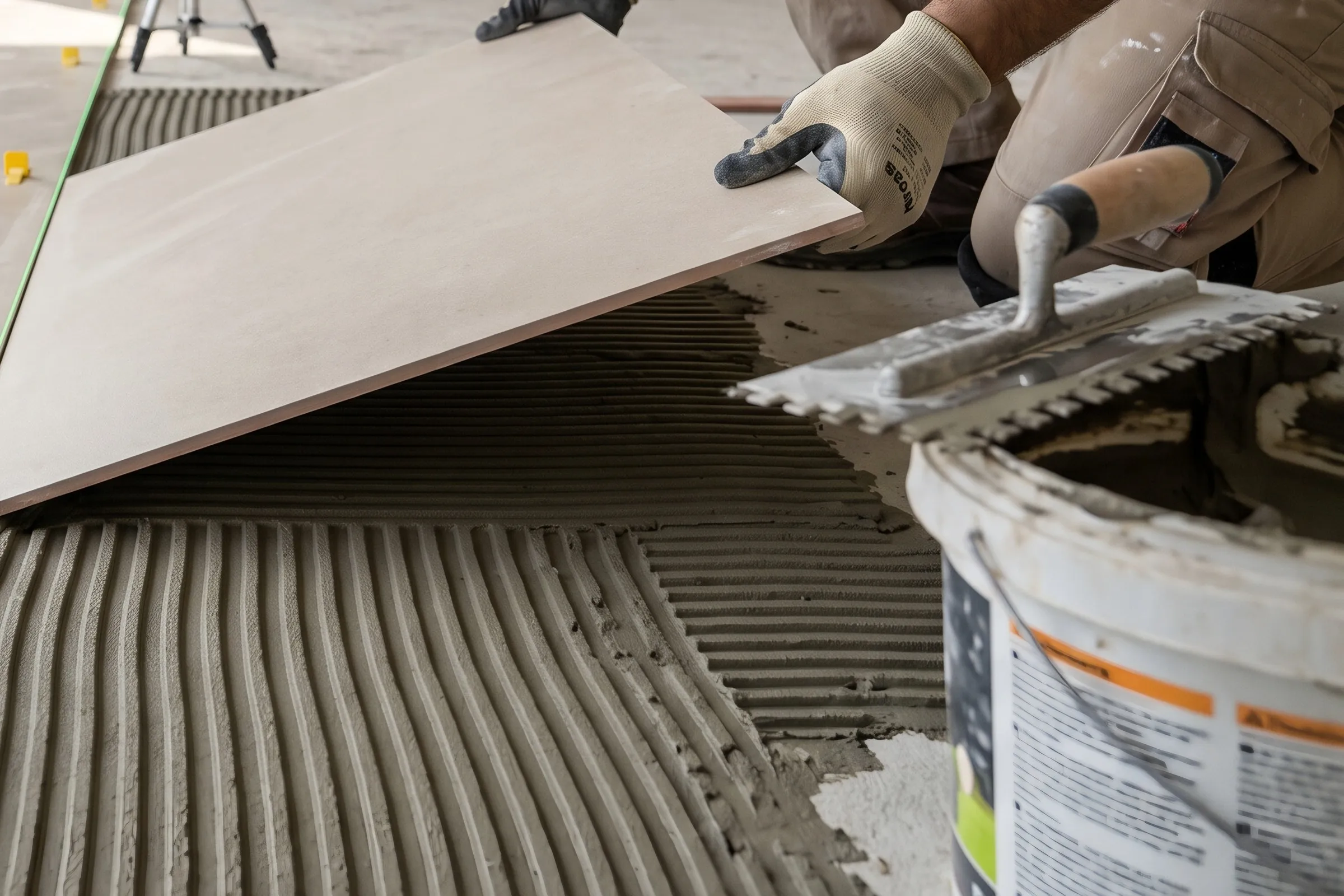
For most Dubai floors, and for every wet area, choose porcelain. It absorbs far less water, copes better with humidity, cleaning and heavy use, and the extra cost is usually small next to the cost of lifting a failed floor. Ceramic still makes sense on bedroom and living-room walls, and on dry, low-traffic surfaces where budget matters.
Below we compare the two on the things that matter in a Dubai apartment or villa: water absorption, price, durability, appearance and installation. We also explain why the laying matters as much as the tile.
What actually separates porcelain from ceramic
Both are fired clay tiles, and both are sold in a wide range of finishes. The practical difference is density. Porcelain has a water absorption of about 0.5% or less. Ceramic is typically around 3–7%. A denser body takes up less moisture, resists staining and is harder to chip through the glaze.
That is why porcelain is the usual choice in hot, humid climates. Dubai has air-conditioned interiors next to humid, wet or sandy exteriors, and floors are mopped often. A tile that soaks up less water holds up better to that routine.
Ceramic is not a bad product. It is lighter and easier to cut, and it is cheaper. Used on walls, where there is no foot traffic, its weaker body rarely matters.
Porcelain vs ceramic: side-by-side comparison
| Criterion | Porcelain | Ceramic |
|---|---|---|
| Water absorption | About 0.5% or less | Typically about 3–7% |
| Best location | Floors, bathrooms, kitchens, balconies (check the slip rating on the datasheet) | Interior walls, dry low-traffic areas |
| Material price, typical range quoted in Dubai in 2026 | About AED 60–180 per sq m for common porcelain; premium and large formats cost more | Often lower; floor-grade ranges of about AED 50–150 per sq m are quoted |
| Installed floor price, rough guide (varies by community and scope) | About AED 140–180 per sq m for a kitchen floor | About AED 90–120 per sq m for a kitchen floor |
| Labour, typical range | From about AED 50 per sq m; more for large formats and complex layouts | Similar or slightly lower; depends on size and pattern |
| Wear and stain resistance | High | Moderate; glaze can chip and show the body |
| Cutting and handling | Harder; needs suitable tools and an experienced tiler | Easier to cut and lighter |
| Design range | Marble-look, wood-look, stone-look, large slabs | Wide choice of wall tiles, patterns and colours |
The price figures are indicative. They come from retail and contractor ranges, and some are not clearly material-only or installed. Treat them as a rough guide in 2026 and confirm against a real itemised quote. For an actual project, the price depends on tile size, pattern, surface preparation and how far the tiler must travel with materials in your building.
When to choose porcelain
- Bathroom and shower floors. Low absorption suits constant moisture. Pair it with proper waterproofing, which does the real protective work. See our guide to bathroom waterproofing cost.
- Kitchens and entrance halls. Dropped pans, grit carried in from outside and daily mopping are hard on glaze.
- Large open living areas and villas. Large-format porcelain gives few joints and a clean look. It needs a stiff, flat, well-supported substrate, and moisture can be trapped under tight joints.
- Wood-look and stone-look floors. Porcelain copies the look of timber or marble without the maintenance. We compare these options in real wood vs wood-look porcelain and marble flooring.
When ceramic is enough
Ceramic is a sensible choice for wall tiling in bedrooms, for a kitchen splashback that is not hit by heavy use, and for secondary spaces like a utility room. It is also an honest way to save on a rental unit where the budget is tight. If you are planning to let the apartment, our note on renovating to rent out covers where the money pays back.
Avoid ceramic on floors that take wet feet, heavy furniture or frequent cleaning, and on balconies. A cheap tile on a hard-working floor often costs more to replace than the saving was worth.
The tile is only half of the floor. Even the best porcelain fails if the substrate is uneven, the layout is unplanned or a wet area has not been waterproofed. Insist that the quote lists surface preparation, waterproofing and adhesive, not just the tile and the labour per sq m.
How installation decides the result
Porcelain is dense and rigid, so it shows every flaw underneath. Large formats make this more obvious. A good tiler checks the screed with a straight edge, levels it where needed and sets out the layout before opening a box.
Our standard is a tile layout planned in advance, tiles laid to a laser level and straight joints. In wet areas we waterproof and flood-test for 24 hours before any tile goes down. Pipes, cables and waterproofing are photographed before they are covered, so you can see what is under the floor even if you are abroad. Manufacturer cure times before a flood test differ, so we follow each product datasheet.
- Define the room and the load. Decide whether it is a wet area, a kitchen, a balcony or a bedroom, and how much traffic it gets.
- Read the datasheet. Check water absorption, slip rating for wet areas, size tolerances and the manufacturer's installation notes.
- Choose the format and plan the layout. Decide on tile size, joint width and where cuts will fall, so there are no thin slivers at doorways.
- Check and prepare the substrate. Level the floor and fix any weak or hollow areas before laying, especially for large formats.
- Waterproof and flood-test. In bathrooms and other wet areas, the membrane goes in first and is tested for 24 hours.
- Lay, grout and hand over. Laser-levelled laying, straight joints, clean grouting and a checklist inspection at the end.
Dubai-specific points before you order
Check your building's rules first. Floor changes in an apartment can affect the neighbours below, and some buildings ask for acoustic underlay or limit when noisy cutting and demolition can happen. Hours and conditions are set by the building and the NOC, so read our summary of renovation permits and NOC and the working hours rules.
Allow for lead times as well. Imported tiles can take weeks to arrive, and a delayed delivery stalls the whole schedule. Order a few extra boxes from the same batch, because shade can vary between production runs. Tile is also only one line in the budget: see how it fits in the overall apartment renovation cost, and for bathrooms the bathroom renovation cost.
Use porcelain for floors, bathrooms, kitchens and balconies, and ceramic only where wear is low, mainly on walls. Spend part of the saving on proper surface preparation and waterproofing, and ask for the tile layout to be agreed before work starts.
Not sure which tile suits your rooms?
We visit, measure, photograph and discuss your brief and budget, then give you an itemised quote with the price and timeline fixed in the contract. See also our bathroom renovation service.
Book a site surveyFAQ
Is porcelain always better than ceramic for floors in Dubai?
For floors, yes in almost every case. Porcelain absorbs about 0.5% water or less, against roughly 3–7% for ceramic, and it handles wear and frequent mopping better. Ceramic can still be used on a dry, low-traffic floor if budget is the main limit.
How much more does porcelain cost than ceramic?
As a rough guide in 2026, porcelain supply is typically quoted at about AED 60–180 per sq m, and ceramic floor tile at about AED 50–150 per sq m. The gap is often modest. Installed price depends on tile size, layout, surface preparation and labour, so use an itemised quote.
Can I use ceramic tiles in a Dubai bathroom?
On bathroom walls, yes, if the substrate is properly waterproofed. On the floor and in the shower, porcelain is the safer choice. In both cases, the waterproofing under the tile matters more than the tile type.
Do large-format porcelain tiles need special preparation?
Yes. They need a stiff, flat, well-supported substrate, and moisture can be trapped under tight joints. Level the floor before laying, plan the layout, and follow the manufacturer's instructions for adhesive and joints.