Renovating Your Dubai Apartment While Living Abroad
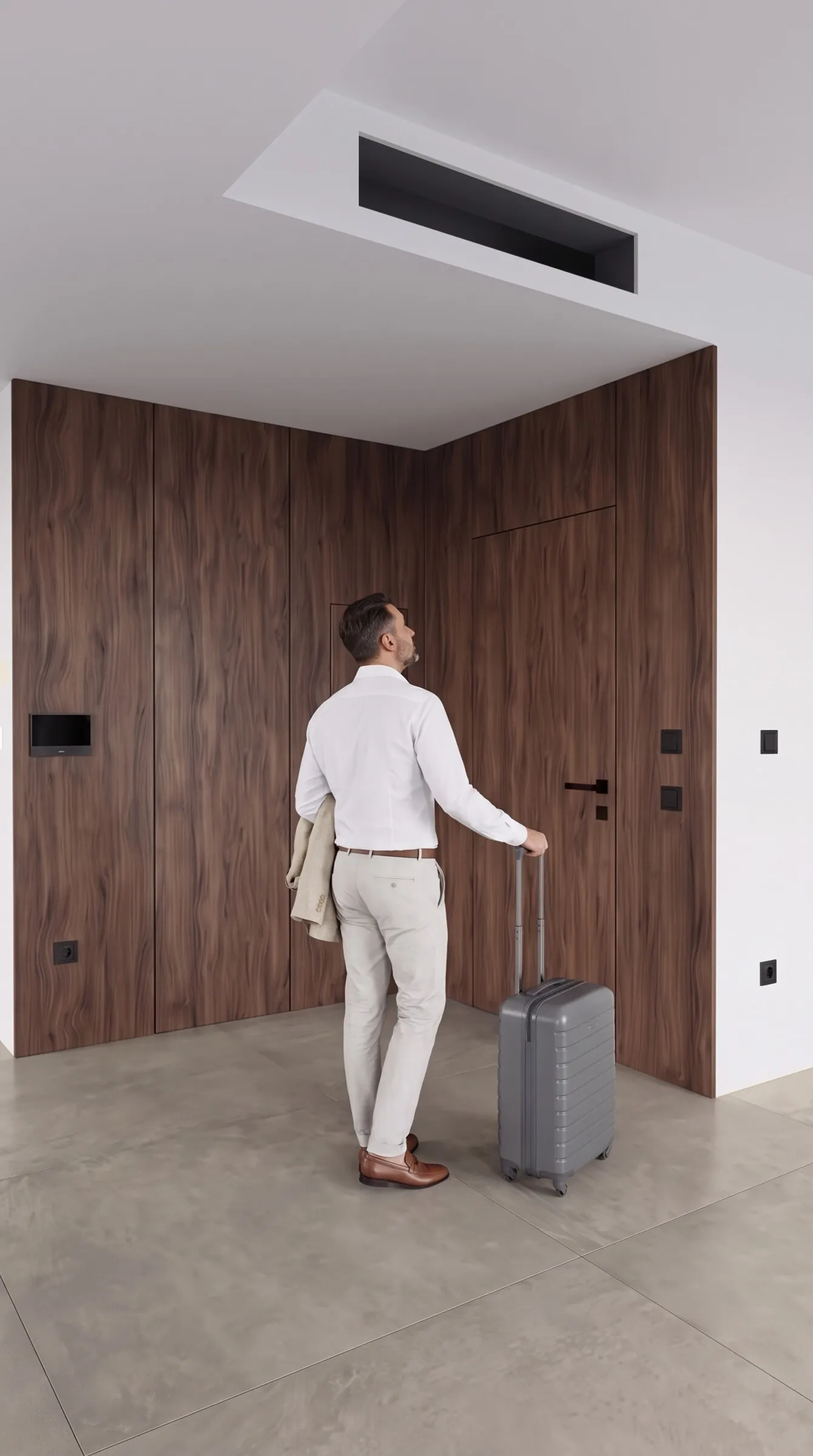
You can renovate a Dubai apartment from another country, provided three things are in place. Someone local must be accountable on site every day. Every decision must be made and recorded before work starts. Every stage must be proven to you with photos and video before the next one begins.
Below is how that works in practice, what you still have to arrange yourself, and where remote projects usually go wrong.
What changes when you are not in Dubai
The work itself does not change. Demolition, plumbing, electrics, waterproofing and finishing are the same whether the owner is in Marina or in another time zone. What changes is who catches problems. A resident owner walks in, sees a crooked tile line and says so the same day. A remote owner sees only what is sent. So the process has to be built around evidence and early decisions.
The risks are specific:
- Slow decisions. A question about a tile or a socket position waits for your reply while the crew waits for the answer. Settle choices up front, in writing.
- Hidden work you never see. Pipes, cables and waterproofing vanish behind tile and plaster within days. Without photos taken beforehand, you are trusting blind.
- Approvals that stall. The building will not start the NOC process on a vague request, and missing paperwork costs weeks.
- No one to sign. Access cards, deposits and handover all need a responsible person. Agree who that is before the contract.
The remote renovation checklist
This is the order we recommend. Each step has to finish before the next one starts.
- Survey and brief. Our team visits, measures, photographs every room and discusses your budget and priorities. You can join by video call. If you have a tenant, a family member or an agent in the apartment, they only need to open the door.
- Design agreed online. Layout, working drawings and photorealistic visualisation of every room, including visualisation on photos of your own rooms, so you see the result before demolition. Approve the final package in writing.
- Itemised quote and contract. Price and timeline are fixed in the contract, with no extras beyond the quote. Payment stages are written into the contract. Read the clauses on variations and delays; see renovation contract clauses that protect you.
- NOC and permits. We prepare and submit the documents for the building NOC and, where needed, authority approvals. Work does not start until the written approval is in hand.
- Works with daily reports. A photo and video report arrives every day. Hidden works are photographed before they are covered. Wet areas are waterproofed and flood-tested for 24 hours before any tile goes down.
- Stage acceptance and handover. You accept each stage by video call. At the end, handover goes against a checklist, followed by cleaning and a written warranty.
Design decisions to lock before you leave it to others
Remote projects stay on budget when the design is finished before the first wall is opened. Ask for these in writing:
- A drawing for every wet room and the kitchen with fixture and socket positions marked.
- A tile layout planned in advance: where the cuts fall, where the joints align, how niches and thresholds finish. Tiles are then laid to a laser level with straight joints.
- A material list with exact finishes, so a supplier substitution cannot happen unnoticed.
- A decision on bespoke built-in furniture, which is made in Dubai to drawings. Check the final dimensions against the site survey.
Visualisation on photos of your own rooms is the most useful tool for someone abroad. It replaces the walk-through you cannot do. If a colour or proportion looks wrong, you find out before it is built. For a closer look at how we handle layout and drawings, see our interior design service.
The most expensive remote mistake is a vague decision, not a bad contractor. "Something light for the floor" turns into a variation later. Agree every finish, position and dimension in writing before the contract is signed, and keep one named person responsible from the first survey to handover.
Approvals you cannot skip from abroad
For an apartment, the building's facility manager, owners' association or developer must approve noisy or intrusive work first. A typical submission includes the contractor's trade licence, insurance, schedule, method statement and drawings, plus a deposit. Dubai Municipality's process for an apartment generally starts from that building NOC. Permits are typically needed for structural changes, plumbing reconfiguration, electrical and AC work and fire and life-safety changes. Repainting usually needs none, but confirm with the owners' association.
As a rough guide in 2026, an owners' association or developer NOC takes about 7 to 14 days. The refundable deposit varies by building: sources quote from AED 2,000 up to AED 30,000, and the building sets the real figure. A developer NOC fee is typically AED 1,000 to AED 5,000. Ask your building management for its own list. Our guide to apartment permits and NOCs explains what each document is for.
One practical point if you are abroad: the building may require the owner's documents or authorisation. Ask building management early what they accept from a non-resident owner, so the request does not stall at the last step. If you rent the apartment out or are a tenant, landlord approval in writing comes first; see landlord approval for tenants.
Unapproved work risks fines, stop-work orders and forced reinstatement, so never let anyone start "just with the demolition" before approval arrives.
Stages, timing and who does what
Durations below are typical ranges quoted in Dubai in 2026. They depend on the building, the scope and how long materials take to arrive.
| Stage | Typical duration | Who does it |
|---|---|---|
| Survey, brief, design and visualisation | Depends on scope and how fast you approve | Our team with you, online |
| Building NOC | About 7 to 14 days | We prepare documents; building management approves |
| DEWA approval for small jobs | About 3 to 7 working days | Registered contractor or consultant |
| Authority permit, where needed | From about 2 weeks to several weeks; sources differ | Licensed consultant or contractor |
| Imported materials | Often 6 to 12 weeks shipping | Ordered by us after design sign-off |
| Studio or 1-bedroom on site | About 6 to 10 weeks | Our site team |
| 2 to 3-bedroom on site | About 8 to 16 weeks | Our site team |
| Handover and snagging list | A few days | Our manager with you by video call |
Order long-lead materials as soon as the design is approved, and add a buffer of one to two weeks. Our article on how long a home renovation takes in Dubai gives more detail.
How to stay in control from another time zone
A video call at the end of each stage is more useful than a long weekly report. Before you accept a stage, check that you have seen:
- Photos of pipes and cables before they were covered.
- The flood test: water level marked at the start and the same level after 24 hours, before tiling.
- The tile layout on the wall or floor, checked against the drawing.
- The state of protected furniture, lifts and corridors. The building will hold the deposit against damage to common areas.
Payments should follow accepted stages, not the calendar. Remember that construction services carry 5% VAT, shown on the invoice. If you want to compare contractors before committing, use eight questions to ask a Dubai contractor, and ask each one how they report progress to clients abroad.
Communication matters as much as craft. We speak English, Russian, Arabic, Chinese and German, so the person on your project can talk to you, the building staff and the site team without translation gaps.
Handover when you are not there
Hand over against a written checklist, not a general impression. Go through the apartment on a live video call with our manager: every room, every socket, every tap, every door. Defects go on a written list with a rectification deadline. Cleaning happens before keys change hands, and you receive the written warranty.
You can also commission an independent inspection. For what an inspection covers, see home snagging in Dubai. After completion, the Dubai Municipality and DEWA final inspections follow, and building management will want the work closed out.
Renovating from abroad works when the design is final before work starts, the approval is in writing, one person answers for the project, and every stage is accepted on video with photos of what is hidden. Start with a survey, agree the design online, and only then sign a fixed-price contract.
Planning a renovation from abroad?
We survey the apartment, agree the design with you online and report every day. See how we work, then tell us about your apartment.
Book a site surveyFAQ
Can I renovate my Dubai apartment without visiting?
Yes, if the survey, design sign-off, contract and each stage acceptance happen online and a local team is accountable on site. We work from a survey, show photorealistic visualisation, and send daily photo and video reports. You approve each stage by video call.
How do I get building approval if I live abroad?
The building's facility manager, owners' association or developer must approve the work first. We prepare and submit the NOC documents. Ask building management early what they accept from a non-resident owner, since requirements vary by building. As a rough guide, an NOC takes about 7 to 14 days.
How do I know the hidden work is done properly?
Pipes, cables and waterproofing are photographed before they are covered, and you receive those photos. Wet areas are flood-tested for 24 hours before any tile goes down. You accept each stage only after seeing this evidence.
How long does a remote renovation take?
The same as one managed in person. Typically a studio or 1-bedroom takes about 6 to 10 weeks on site and a 2 to 3-bedroom about 8 to 16 weeks, plus approvals and material shipping. Fast design decisions from you are the main factor you control.