Villa Extension in Dubai: Rules, Approvals and Cost
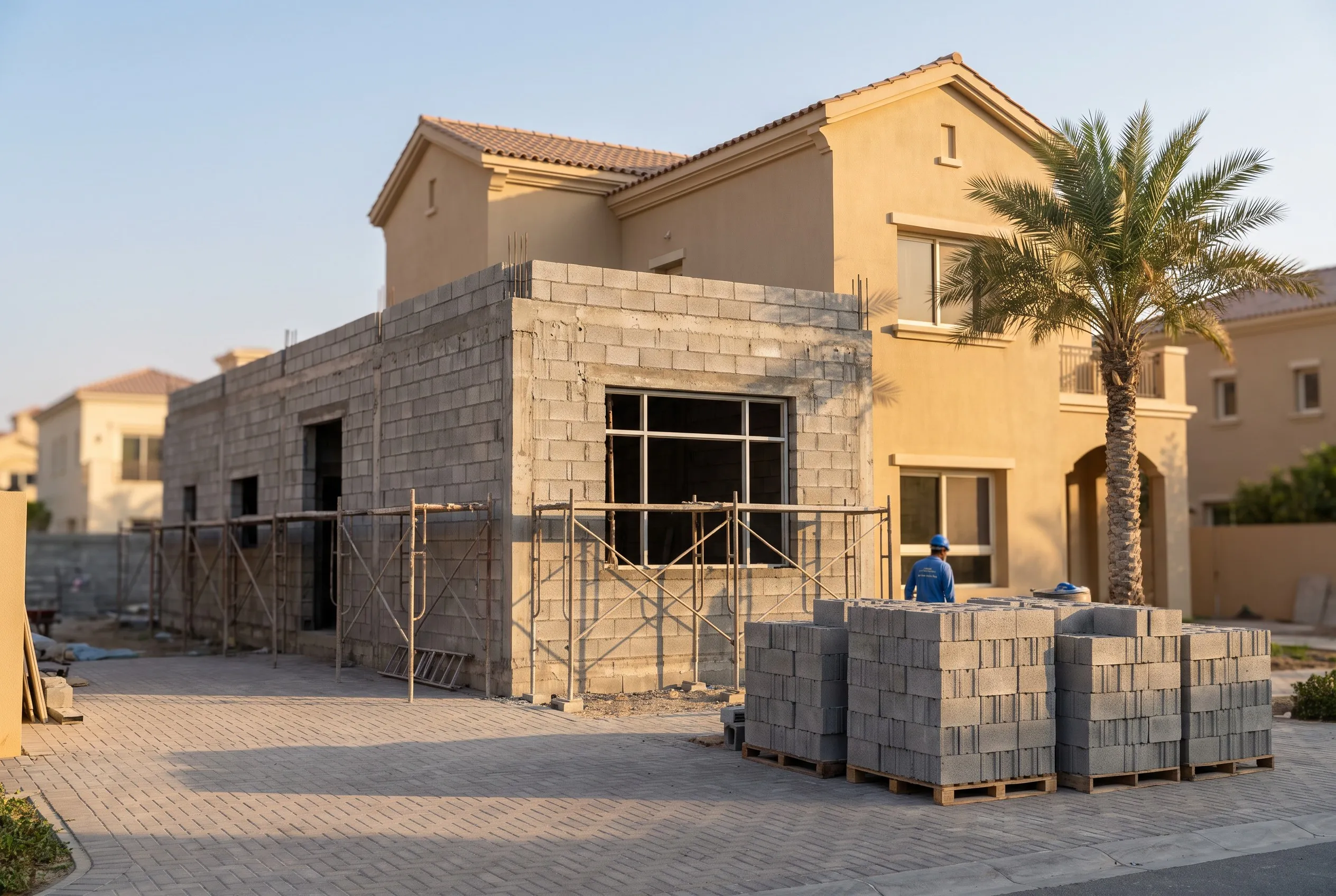
A villa extension in Dubai cannot start on your say-so. It needs the master developer's NOC first, then a building permit through a licensed consultant, and only then a contractor on site. If you skip or reorder these steps, you risk fines, a stop-work order or being told to reinstate the original villa.
Below is the sequence we follow, who does each part, what to budget for approvals, and where the cost and timeline usually move.
What counts as an extension, and why it needs approval
Repainting or replacing a kitchen is a renovation. An extension adds or changes built area: a new bedroom, a larger kitchen or majlis, a first-floor addition, a covered pergola, a garage conversion. These change the footprint, the structure and the services, so they sit in a different approval category from interior work.
Developers publish their own rules. Emaar says any alteration to a villa must be approved by Emaar. Nakheel's guidance, as reported, covers extra bedrooms, kitchen or living-room expansions, first-floor additions, pools, pergolas and garage changes. Treat that Nakheel list as a prompt to ask the developer, not as a full rulebook. In Meraas communities, minor modifications go through RealConnect or Dubai Community Management, which decides whether an NOC is needed.
An older press report on Jumeirah Islands cited fines of around AED 10,000 plus payment for added space, and said owners with unpaid service fees could not modify. Those figures are old, so confirm today's position with your developer. Clear any service-fee arrears before you apply.
The approval chain: developer, consultant, municipality
Three parties sit in the chain, and the order matters.
- Master developer. You apply for the NOC first. With Emaar, the owner applies through the community portal under "Home Modifications"; once approved, the contractor receives a reference number for the contractor permit. Meraas asks for a signed owner request letter, owner ID, title deed copy and a PDF plan of existing and proposed work.
- Licensed engineering consultant. Villa modifications use the Dubai Building Permit System (Build in Dubai), and the application goes through a licensed consultant or a DM-registered contractor. MEP drawings need the consultant's stamp.
- Authority. Dubai Municipality issues the permit in most areas. In freehold areas designated under the Dubai Development Authority (DDA), the permit comes from DDA, and a structural change there needs a separate Building Modification request. In Trakhees areas (for example parts of Palm Jumeirah), Trakhees reviews designs and drawings before construction and issues a Modification Completion Certificate.
Where the work touches power or water supply, it goes through the DEWA Building NOC system. For the permit mechanics in detail, see our guide to the building permit for a villa with Dubai Municipality, and for the fees, renovation permit fees in Dubai.
Never let a contractor start "just the demolition" before the NOC and permit are in hand. Unapproved work leads to fines, stop-work orders and forced reinstatement, and the cost of undoing it falls on you as the owner.
Extension checklist: the steps in order
- Survey and brief. We visit, measure, photograph the plot and the existing villa, and agree what you want to add and your budget. Setbacks, plot coverage and neighbouring structures decide what is realistic.
- Developer pre-check. Ask the developer whether your type of extension is allowed in your community, and what drawings it wants. Some communities do not allow external changes that alter the villa's look.
- Drawings and consultant. The design is drawn up, and the licensed consultant prepares and stamps the architectural, structural and MEP drawings for submission. In the layout work we show you the new rooms visualised before anything is built.
- NOC, then permit. Obtain the developer NOC first, then lodge the permit through Dubai's permit system. We prepare and submit the documents for the NOC and, where needed, the authority approvals.
- Contract with a fixed price. Once approvals are clear, the itemised quote, price and timeline go into the contract. Hidden works such as pipes, cables and waterproofing are photographed before they are covered.
- Build, inspect, close out. Work proceeds with daily photo and video reports. At the end, Dubai Municipality and DEWA final inspections follow, and handover is against a checklist with a written warranty.
Stages, durations and who does what
The figures below are typical ranges quoted in Dubai in 2026 and come from industry guides. They conflict in places, so your developer and consultant have the final word on your case.
| Stage | Typical duration | Who does it |
|---|---|---|
| Developer NOC | Often 7–14 days; some sources say days to about 2 weeks. Meraas timelines are unconfirmed | Owner, with our team preparing documents |
| Design and drawings | Depends on scope and your decisions | Designer and licensed consultant |
| Dubai Municipality permit review | 10–15 working days for simple projects; 4–12 weeks quoted for others | Consultant or DM-registered contractor |
| DEWA approval, small jobs | Typically 3–7 working days | Registered consultant or contractor |
| Imported materials | 6–12 weeks shipping; keep a 1–2 week buffer | Contractor, ordered early |
| Build and fit-out | Villa projects: partial 4BR 12–18 weeks; complete 5–6BR 18–30 weeks (whole-villa guides, not extension-only) | Contractor and subcontractors |
| Completion certificates | Follows final inspections | Contractor, owner, DM and DEWA |
The longest single delay is usually not the build. It is a permit sent back for corrections or materials ordered after approval instead of during it. Order long-lead items as soon as the design is fixed, as long as you are comfortable carrying the risk if the permit changes.
What an extension costs and what to budget for approvals
We cannot give you a reliable AED per sq ft for the structural shell of an extension. The published sources we trust cover renovation, not new build area, and structural cost depends on the foundation, height, spans, and whether a first floor is added. A consultant's estimate on your plot is the only honest figure.
What is published gives you a guide for approvals and finishing:
- Developer NOC fee: typically AED 1,000–5,000.
- Refundable owners' association or developer deposit: sources range from AED 2,000 to 30,000, and each community sets its own figure.
- Total government permit fees, excluding consultant and contractor: typically AED 3,000–6,000 for a minor villa scope and AED 7,000–12,000 for a full villa renovation. A large extension should be checked against the second band.
- Consultant and contractor fees are on top, and VAT at 5% is shown on the contractor's invoice.
For the interior of the new space, villa renovation is typically quoted at AED 120–250 per sq ft (basic), 250–450 (mid-range) and 450+ (luxury) as a rough guide in 2026. Kitchens, bathrooms and joinery can make per-sq-ft figures unreliable, so use them to sense-check, not to price. Our villa renovation cost guide explains what moves those numbers.
Practical points before you commit
Tie the new area into the existing villa properly. That means AC capacity, electrical load and drainage. If the extra rooms push your load up, a DEWA load change may be required, and the cooling system often needs re-checking. See AC and ventilation during a Dubai renovation before you finalise the plan.
Noise and working hours are set by the permit and your community. Reported Dubai Municipality daytime windows run from 6am or 7am to 8pm, but sources differ, so follow the hours written into your approval. Tell your neighbours before you start.
Choose a contractor who will put the permit scope in writing and give you a fixed price and timeline. Our guide to choosing a renovation contractor in Dubai lists the questions to ask, and you can see how our process runs on the how we work page.
Start with the developer's rules, not the design. Confirm what is allowed, get the NOC, have a licensed consultant file the permit, and only then sign a fixed-price contract. Budget for approvals, the deposit and a time buffer, and ask for a consultant's estimate of the structural shell, because no published figure will fit your plot.
Planning a villa extension?
We will survey the villa, check what your developer allows, and give you an itemised quote with a fixed price and timeline.
Discuss your villaFAQ
Do I need permission to extend my villa in Dubai?
Yes. The master developer must approve the alteration, and a building permit is needed through Dubai Municipality, DDA or Trakhees depending on the area. The permit is applied for through a licensed consultant or a registered contractor. Unapproved work can lead to fines, stop-work orders and reinstatement.
How long does the approval take?
Developer NOCs are typically quoted at 7–14 days. Municipality review is quoted from 10–15 working days for simple projects up to 4–12 weeks in other sources. Your consultant can tell you which applies to your plan.
How much do permits and NOCs cost?
As a rough guide in 2026, a developer NOC is typically AED 1,000–5,000, and total government permit fees are AED 3,000–6,000 for a minor villa scope and AED 7,000–12,000 for a full renovation. A refundable deposit may be added, and consultant and contractor fees are separate.
Can I extend a rented villa?
Only with the landlord's written permission, and the necessary licences from the authorities. Under Dubai law a tenant may not make changes without that permission. Keep the approval in writing and check your Ejari contract first.