Villa Interior Design Ideas in Dubai: Modern and Luxury
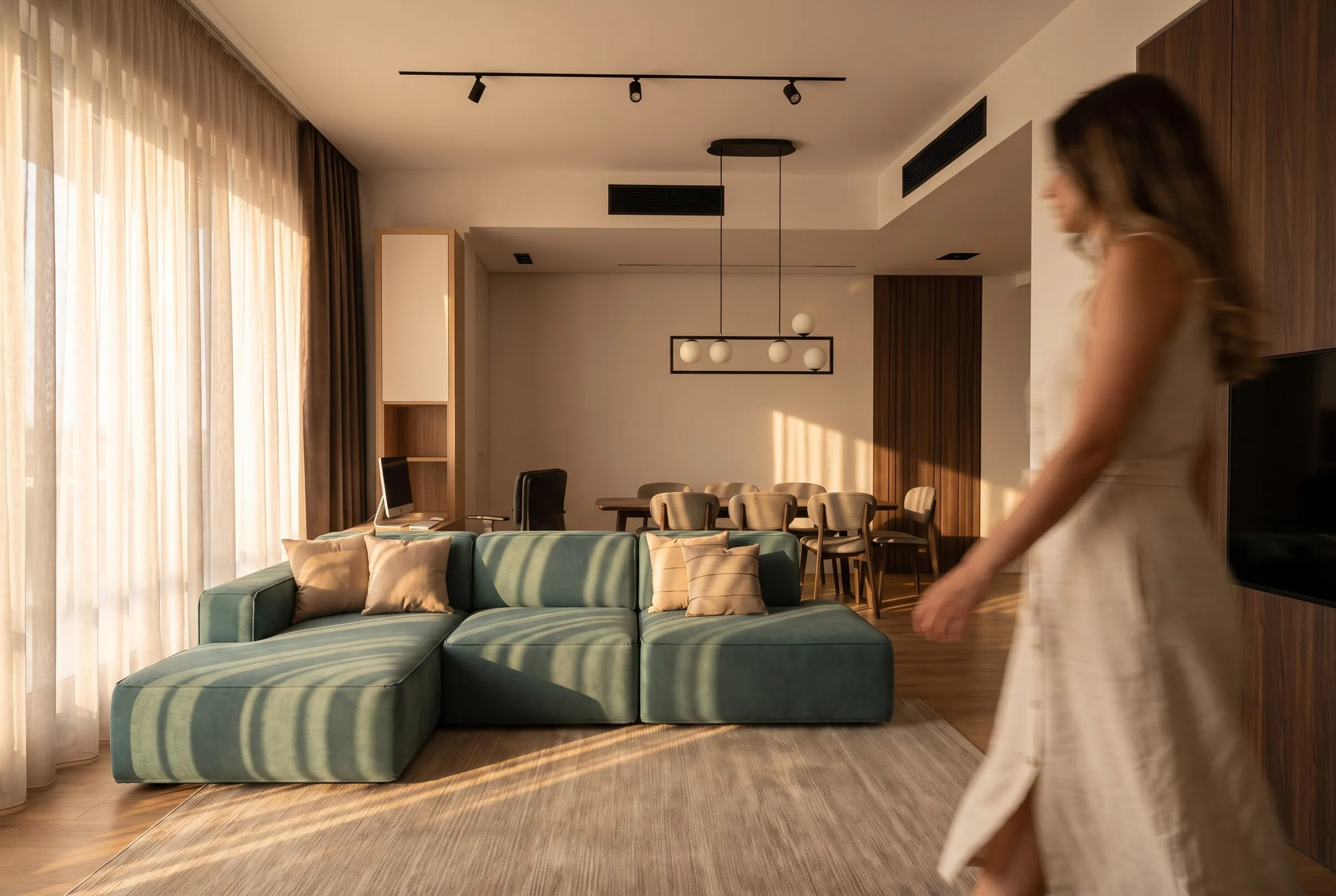
A good villa interior in Dubai starts with the plan, not the finishes. Fix how the ground floor flows, where the light comes from and where the joinery goes. Then choose materials that cope with heat, humidity and a lot of glass. Style, whether modern or luxury, comes last and is mostly a matter of proportion, restraint and detail.
Below are the ideas we use most often on villa projects, what separates a modern scheme from a luxury one, and how the design leads into the build.
Start with the layout: the ground floor sets the tone
Most Dubai villas were built with a standard plan: a separate kitchen, a formal majlis or living room, a dining room that is rarely used and a maid's room near the kitchen. Families now live differently, so the first design question is which walls still earn their place.
- Kitchen and dining. Opening the kitchen towards the dining area is the most common change. A villa has room for a proper island and a separate prep or back kitchen that keeps cooking smells away from the living space.
- Living areas. One large living space with a clear sitting zone often works better than two half-used rooms. A formal majlis can stay if the household really uses it.
- Service rooms. A maid's room, store or laundry can become a study, a second pantry or a utility room with proper ventilation.
- Staircase and double-height spaces. The staircase is the first thing a visitor sees. Treat it as a feature, with good lighting and a balustrade that suits the rest of the scheme.
Moving walls in a villa usually needs approval. In master communities the developer must approve alterations, and for larger changes a Dubai Municipality permit applies. See building permits for a villa in Dubai before you fall in love with a plan that cannot be approved.
Modern villa interior: what it looks like in practice
A modern villa interior is calm and uncluttered. The effect comes from a small number of decisions made consistently.
- A limited palette. Two or three main colours and one accent material, such as oak, bronze or stone. Warm neutrals work well with strong Dubai daylight; cold white can look harsh by noon.
- Continuous surfaces. One floor material across the main living areas, with few thresholds and thin, straight skirtings. Large-format porcelain is a common choice; see porcelain versus ceramic tiles in Dubai.
- Hidden storage. Handleless kitchen fronts, full-height doors, wardrobes that sit flush with the wall. Clean lines depend on built-in furniture rather than loose pieces.
- Architectural lighting. Linear slots, recessed spots and cove lines, with decorative fittings used sparingly. Our notes on lighting design for Dubai homes explain the layers.
- Fewer, better objects. One large piece of art or a sculptural light does more than a dozen small items.
Luxury villa interior: where the money shows
Luxury is rarely about adding more. It is about material quality, precision of execution and detail that is planned from the first drawing.
- Natural stone and book-matched slabs. Marble, onyx or quartzite used on a feature wall, a kitchen island or a stair landing. Stone needs care in a hot, humid climate; read marble flooring in Dubai: good or bad choice before committing to a whole floor.
- Bespoke joinery. Walk-in dressing rooms, library walls, bar units and a TV wall made to measure. In our work these are made in Dubai to our drawings, so the dimensions fit the room exactly.
- Ceiling work. Coffers, recessed shadow gaps and curved gypsum details with integrated light. See gypsum ceilings in Dubai.
- Statement bathrooms. A master bathroom with a freestanding bath, a generous walk-in shower, stone vanity and heated mirror lighting.
- Integrated systems. Lighting scenes, curtains, AC zoning and sound planned together, with wiring in place before the walls are closed.
The most expensive mistake in a villa interior is choosing finishes before the plan is fixed. Positions of lights, sockets, AC grilles and joinery must be drawn together, because moving them after the walls and ceilings are closed means opening up finished work.
Materials and details that suit Dubai's climate
A villa has more exposed glass, more floor area and more outdoor transitions than an apartment. That changes what works.
| Area | Good choice | What to watch |
|---|---|---|
| Main floors | Large-format porcelain, stone-look or wood-look | Needs a flat, well-supported substrate; plan the layout so cuts fall in sensible places |
| Warm wood feel | Wood-look porcelain or engineered wood | Compare options in real wood versus wood-look porcelain |
| Kitchen surfaces | Quartz worktops, moisture-resistant carcasses | Heat, steam and daily use; see quartz versus granite |
| Wet areas | Waterproofed and flood-tested floors and walls | Waterproofing must be done before tiling, not instead of good tiling |
| Large glazing | Light curtains with blackout layers, solar-control glass | Sun fades timber and fabric on south and west sides |
| Doors and joinery | Full-height doors, built-in wardrobes | Humidity can swell cheap boards; specify edges and finishes properly |
Porcelain absorbs very little water, which is why it is the usual choice in hot, humid conditions. For villa terraces and pool surrounds, choose a slip-rated surface and think about how the interior floor meets it.
How a villa design goes from idea to finished rooms
A design is only useful if it can be built to the same standard as it is drawn. This is the sequence we follow.
- Survey and brief. We visit, measure, photograph and discuss how you live, what you want to keep and your budget.
- Layout options. Plan variants for each floor, with the approval question answered early: which walls can move and who must sign off.
- Concept and visualisation. A photorealistic image of every room, including visualisation on photos of your own rooms, so you see the result before work starts.
- Working drawings and itemised quote. Dimensions, joinery details, lighting and socket plans. The price and timeline are fixed in the contract.
- Approvals and build. We prepare the NOC documents, then run demolition, plumbing, electrics and finishing with a daily photo and video report. Hidden works are photographed before they are covered.
- Handover. Checklist inspection, cleaning and a written warranty.
If you live abroad, the design and each stage can be agreed and accepted online by video call. More detail is in our guide to full villa renovation stages.
What a villa interior typically costs
Design intent drives cost far more than size. As a rough guide in 2026, villa renovation is typically quoted at AED 120–250 per sq ft for a basic scope, AED 250–450 for mid-range and AED 450 and above for luxury. Whole-villa totals are typically around AED 200,000–350,000 for basic, AED 400,000–800,000 for mid-range and over AED 1 million for luxury.
Individual items vary widely. Typical Dubai ranges include a villa kitchen at AED 80,000–150,000 mid-range and built-in wardrobes at AED 1,200–3,500 per linear metre. These are typical ranges quoted in Dubai in 2026, not our prices. The result depends on stone and joinery specification, the amount of plumbing and electrical change, and the finish level you choose. Our guides to villa renovation cost and built-in wardrobes go through the components.
Fix the layout first, then the lighting and joinery plan, then choose materials. Modern means restraint and clean detail; luxury means material quality and precise execution. Whichever you pick, see the rooms visualised and have the price itemised before the first wall is touched.
Plan your villa interior with us
We survey the villa, draw the layout, visualise each room and give you an itemised quote with a fixed price and timeline. See how it works on our interior design page or look at our projects.
Discuss your villaFAQ
What is the difference between a modern and a luxury villa interior?
A modern interior is defined by restraint: a limited palette, clean lines and hidden storage. A luxury interior adds material quality and precision, such as book-matched stone, bespoke joinery and integrated lighting. The two can be combined, and many Dubai villas are both.
Do I need approval before changing a villa layout in Dubai?
Usually yes. In master communities the developer must approve alterations, and larger changes may also need a Dubai Municipality permit. We prepare and submit the documents for the NOC and, where needed, authority approvals.
How much does a villa interior cost in Dubai?
As a rough guide in 2026, villa renovation is typically quoted at AED 120–250 per sq ft for basic scope, AED 250–450 for mid-range and AED 450+ for luxury. The final figure depends on materials, joinery and how much plumbing and electrical work changes. We give an itemised quote after a survey.
Can I see the design before work starts?
Yes. We produce a photorealistic visualisation of every room, including visualisation on photos of your own rooms. Clients abroad can agree the design online and accept each stage by video call.