Kitchen Renovation Mistakes to Avoid in Dubai
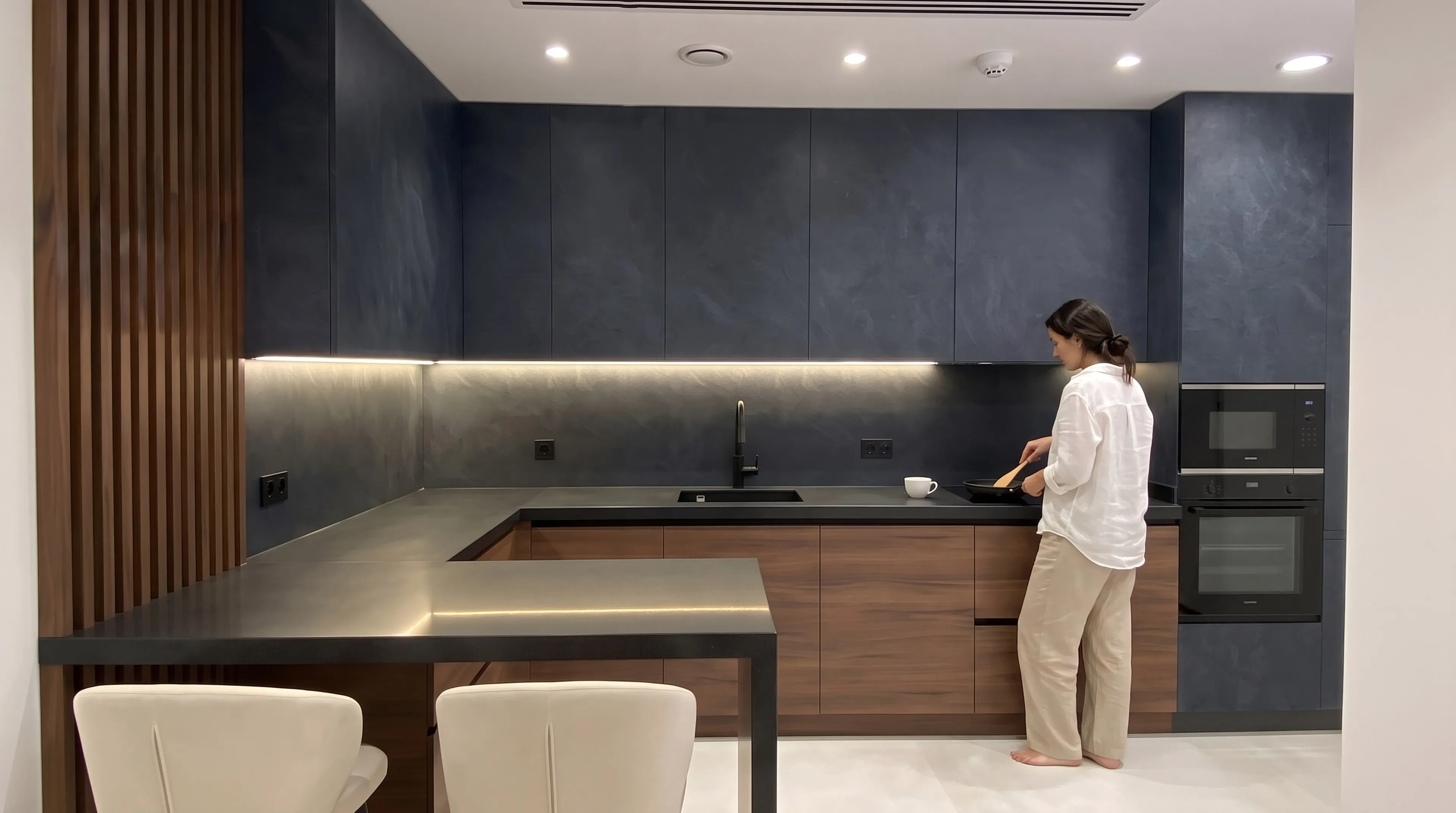
Most kitchen renovation mistakes are made before the first cabinet arrives. The usual ones are a budget with no reserve, no building approval, joinery ordered before the services are fixed, and materials that do not suit Dubai's heat and humidity. Each of these is cheap to prevent on paper and expensive to fix on site.
Below are the mistakes in the order they usually happen, with what to do instead. If you are still working out the budget, read kitchen renovation cost in Dubai alongside this article.
Mistakes made before work starts
Starting without building approval
Moving a sink, adding a gas or water point, or changing electrical and AC work normally needs permission. In an apartment the facility manager, owners' association or developer must approve the work before noisy or intrusive works begin. In a villa the master developer's NOC comes first. Typically the building also asks for the contractor's trade licence, insurance, a schedule, a method statement and drawings.
Skipping this risks fines, a stop-work order and forced reinstatement, usually after the kitchen is half built. The developer or association NOC typically takes about 7–14 days, so ask for it before you order anything. Our team prepares and submits the NOC documents. For the full process see Dubai renovation permits and the NOC. Tenants also need the landlord's written approval first (tenant rules).
Budgeting only for cabinets and worktop
As typical ranges quoted in Dubai in 2026, an apartment kitchen runs roughly AED 20,000–50,000 at the basic level, AED 50,000–120,000 mid-range and AED 120,000–250,000+ at the top end. What you pay depends on size, cabinetry, appliances, worktop, and how much plumbing and electrics move. The common error is to price the visible parts and forget demolition, waste removal, wiring, tiling, lighting, the NOC deposit and 5% VAT.
The building deposit is refundable but ties up cash. Quoted figures vary widely, from about AED 2,000 to AED 30,000, and each building sets its own. Ask the building for the actual number.
Choosing finishes before the layout is fixed
A beautiful door colour does not tell you where the sink, hob and fridge go. Fix the layout and the appliance list first, then the drawings, then finishes. Seeing the kitchen visualised on photos of your own room catches problems like a fridge door that hits a wall or a hood that crosses a window, before anything is built.
Layout and planning mistakes
- Cramped working zone. Sink, hob and fridge should be close enough to work between, but with clear worktop either side of the hob and sink. Two people should be able to pass, and every door and drawer should open fully.
- Not enough sockets. Kettle, coffee machine, air fryer, blender and a dishwasher add up. Plan sockets above the worktop and dedicated circuits for large appliances. If the wiring is old, see electrical rewiring in Dubai.
- Weak lighting. One central fitting leaves the worktop in shadow. Add task lighting under wall cabinets. More in lighting design for Dubai homes.
- Poor extraction. Cooking odours and steam spread fast in a closed apartment. Decide where the extraction duct runs before the ceiling and cabinets are fixed.
- Opening the kitchen without thinking it through. An open plan changes noise, smell and storage. Weigh it first in open kitchen pros and cons.
Materials that struggle in Dubai
Heat, humidity and air conditioning cycles are hard on a kitchen. Four choices matter most.
Cabinet carcasses and edges
Moisture gets into poorly sealed edges and cut-outs near the sink and dishwasher. Ask what the carcass is made of, how edges are sealed, and what sits under the sink. Compare options in custom, modular or IKEA cabinets.
Worktop
Choose by use, not photo: stain, heat and chipping behave differently in quartz, granite and other stones. See quartz vs granite and quartz price per linear metre.
Floor tiles
Porcelain absorbs about 0.5% water or less, against roughly 3–7% for ceramic, which is why it is the usual choice in hot, humid climates. Large formats need a flat, well-supported substrate. See porcelain vs ceramic.
Splashback and wet zone
The wall behind the sink and the floor around it take the water. Use a surface that wipes clean, with minimal joints, and waterproof the zone properly.
Hidden works: where the costly mistakes live
Pipes, cables and waterproofing disappear behind tiles and cabinets, so errors there are the hardest to fix. Typical failures are reusing old supply pipes, a sink drain with too little fall, joints buried in walls, and no waterproofing around the sink area. We photograph hidden works before covering them, so you can see what is behind the finish.
Never let tiles or cabinets go over plumbing and waterproofing that has not been checked. A leak from a kitchen can reach the apartment below, and the repair then covers two homes, not one.
A sensible order of work prevents most of this:
- Survey and brief We measure, photograph, and agree the layout, appliances and budget.
- Approvals The building NOC, and any authority approval, is submitted before demolition. Neighbours are told.
- Drawings and visualisation Working drawings fix socket, water and extraction points. You approve the look before work begins.
- Strip-out and services Old units come out, then pipes and cables are installed and photographed before closing.
- Waterproofing and tiling Wet zones are waterproofed and flood-tested for 24 hours before any tile goes down. Tiles follow a planned layout on a laser level.
- Joinery, worktop and handover Cabinets are fitted, appliances connected and everything checked against a handover checklist.
Mistake, consequence and fix
| Mistake | What happens | What to do |
|---|---|---|
| No NOC before starting | Stop-work order, fines, reinstatement | Get written approval first; allow about 7–14 days |
| Budget covers only cabinets | Overspend on services, tiling, VAT | Get an itemised quote that covers every stage |
| Joinery ordered before services are fixed | Cut-outs and appliances do not fit | Fix drawings and appliance specs first |
| Too few sockets | Extension leads and overloaded circuits | Plan points per work zone and large appliances |
| Weak extraction | Odour, grease on surfaces | Plan duct route before ceiling and cabinets |
| Moisture-prone edges and joints | Swelling, peeling near sink and dishwasher | Specify sealed edges and moisture-suited materials |
| No waterproofing in the wet zone | Leaks to neighbours below | Waterproof, flood-test, then tile |
| Hidden works not recorded | Nobody knows what is behind the wall | Photograph before covering |
Mistakes with the contractor and the contract
The costliest one is a vague quote. If the price is a single line, extras appear later. Ask for an itemised quote, with the price and timeline fixed in the contract and written payment stages. Check what happens on a delay or a defect. The questions in choosing a renovation contractor in Dubai and the clauses in renovation contract clauses cover this.
Also plan for site rules. Dubai buildings set their own work hours in the NOC, usually on weekdays, and require protection for lifts and corridors. If you live abroad, agree design online and accept each stage by video call, with a daily photo report. See renovating from abroad.
Before you sign anything, check four things: approval is in hand, the quote is itemised, the layout and appliances are drawn, and the wet zone is waterproofed and tested. Do those and most of the mistakes above never happen.
Plan your kitchen without surprises
We visit, measure, agree the layout and budget, handle the NOC paperwork and give you an itemised quote with a fixed price and timeline. Learn how we run a kitchen renovation or see how we work.
Plan your kitchenFAQ
What is the most expensive kitchen renovation mistake in Dubai?
Usually hidden work done badly, especially plumbing and missing waterproofing, because it means opening finished tiles and cabinets again. Unapproved work is next, since it can bring a stop-work order and forced reinstatement.
Do I need approval to renovate my kitchen in Dubai?
Often yes. Moving plumbing, changing electrics or AC work, or altering layout typically needs permission. For an apartment this comes from the building management, owners' association or developer, and for a villa from the master developer. Confirm with your building before starting.
How much should I budget for a kitchen in Dubai?
As typical ranges quoted in Dubai in 2026, about AED 20,000–50,000 basic, AED 50,000–120,000 mid-range and AED 120,000–250,000+ premium for an apartment kitchen. Size, cabinetry, appliances, worktop and how much plumbing moves decide where you land. Add 5% VAT and a building deposit.
Which materials suit a kitchen in Dubai's humidity?
Porcelain tiles suit the climate because they absorb very little water. Cabinet edges and the area around the sink need good sealing, and the wet zone needs proper waterproofing. Ask for the material specification of each item before you approve the quote.